
Your liver can develop damage long before you notice any symptoms. Even routine blood tests may not reveal the full picture, leaving you uncertain about your liver’s health. FibroScan technology offers a simple, noninvasive way to assess liver stiffness and fat buildup without surgery or needles.
By identifying possible signs of liver scarring and fatty changes, this test helps doctors evaluate liver health and guide further care. Understanding how FibroScan works and what its findings mean can help you make informed decisions.
Table of Contents
What Is FibroScan Technology, and How Does It Work?
FibroScan is a noninvasive liver assessment that uses specialized ultrasound technology, called transient elastography, to measure liver stiffness and estimate fat accumulation. It helps doctors identify possible signs of liver disease without making an incision or collecting a tissue sample.
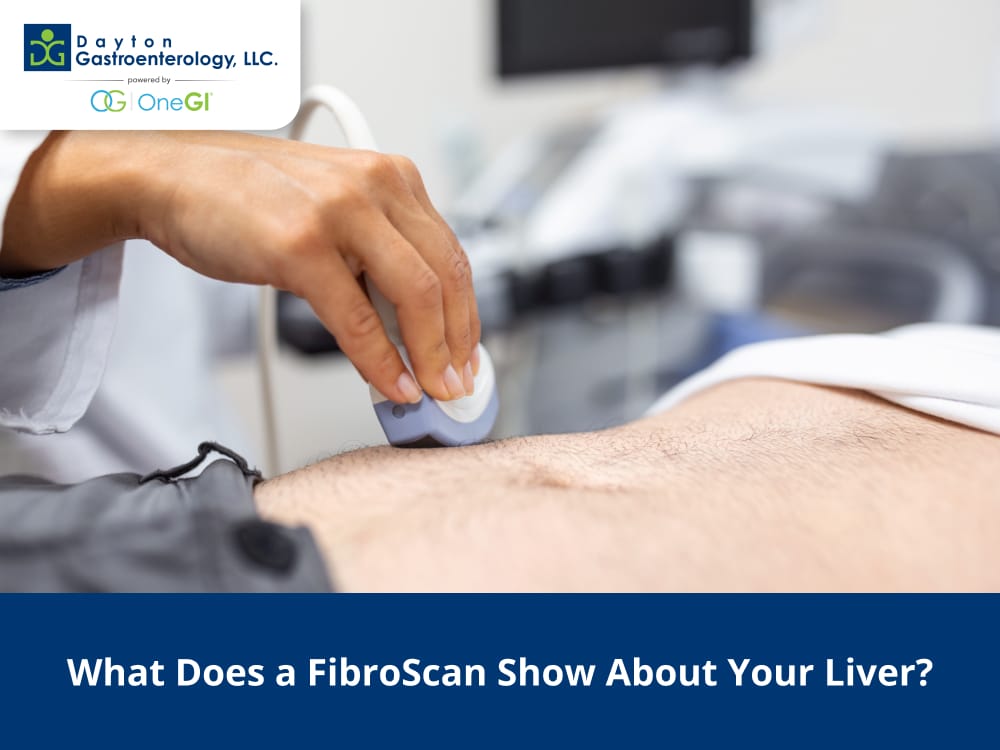
During the examination, a healthcare professional places a small probe against the skin over your liver. The device sends gentle vibrations through liver tissue and measures how quickly the resulting waves travel.
These measurements help assess tissue firmness. Healthy liver tissue is generally flexible, while scarred tissue often becomes firmer.
FibroScan also uses a feature called the Controlled Attenuation Parameter (CAP) to estimate fat accumulation in the liver.
Unlike a conventional ultrasound, which primarily shows the liver’s appearance and structure, FibroScan provides numerical measurements that help doctors assess two important features of liver health: fat and stiffness.
What Does a FibroScan Show About Your Liver Health?
The answer to what does a FibroScan shows involves two key findings: possible liver scarring, known as fibrosis, and excess fat accumulation, known as steatosis. These measurements help doctors understand the likelihood and potential severity of certain liver conditions.
1. Detects Liver Scarring Before Symptoms Appear
FibroScan can identify increased liver stiffness that may indicate fibrosis, even when someone feels healthy and has no obvious symptoms.
Fibrosis develops when repeated liver injury causes scar tissue to accumulate. Over time, significant scarring can interfere with normal liver function and may progress to cirrhosis.
The test estimates the likelihood of fibrosis at different stages:
- F0–F1: Little or no liver scarring.
- F2: Moderate fibrosis.
- F3: Advanced or severe fibrosis.
- F4: Cirrhosis, the most advanced stage of scarring.
FibroScan does not directly examine scar tissue under a microscope. Instead, doctors use its stiffness measurements, medical history, and other tests to estimate the stage of fibrosis.
Early detection matters because addressing the underlying cause may help prevent additional liver injury.
2. Identifies Fat Buildup in the Liver
FibroScan can estimate hepatic steatosis, which occurs when excess fat accumulates inside liver cells.
Fat accumulation may develop alongside metabolic conditions such as type 2 diabetes, obesity, insulin resistance, and high cholesterol.
A 2025 study published in the Journal of Clinical Gastroenterology, using U.S. National Health and Nutrition Examination Survey data from 2017–2023, estimated the age-standardized prevalence of metabolic dysfunction-associated steatotic liver disease (MASLD) at 32.42% among U.S. adults. Read the study on PubMed.
This highlights why evaluating liver health matters, particularly for people with metabolic risk factors.
FibroScan helps doctors assess fat accumulation and possible scarring together, providing information that can guide further testing and care.
What Does FibroScan Measure, and How Do Doctors Interpret the Numbers?
Understanding what does FibroScan measures starts with two values: liver stiffness in kilopascals (kPa) and liver fat estimates in decibels per meter (dB/m).
These measurements provide different information and should be interpreted together.
| Measurement | What it evaluates | What the result may indicate |
| Liver stiffness measurement (LSM) | Firmness of liver tissue | Possible fibrosis or advanced scarring |
| Controlled Attenuation Parameter (CAP) | Fat-related changes in liver tissue | Possible fatty liver disease |
| Fibrosis stage estimate | Likely extent of liver scarring | Risk of progression or advanced liver disease |
| Changes over time | Differences between repeat assessments | Possible improvement, progression, or measurement variation |
What Does a Liver Stiffness Score in kPa Mean?
A FibroScan liver stiffness reading measures how firmly liver tissue responds to the test’s vibrations. Higher readings may indicate greater fibrosis, although inflammation and other conditions can also increase stiffness.
According to the American Association for the Study of Liver Diseases (AASLD) practice guidance, a liver stiffness measurement below 8 kPa can help rule out advanced fibrosis in certain patients with fatty liver disease, particularly when combined with a blood-based risk assessment such as FIB-4.
However, there is no single cutoff that applies to every liver condition.
A higher number does not automatically confirm cirrhosis. Your physician must consider the underlying disease, other test results, and factors that may influence the measurement.
What Does the CAP Score Reveal About Liver Fat?
The CAP score estimates the degree of fat accumulation in liver tissue. A higher CAP value generally suggests more fat.
Doctors may describe liver fat using categories from S0, indicating little or no steatosis, through S3, indicating more extensive fat accumulation.
However, CAP does not provide an exact percentage of liver fat for every patient. Its accuracy can vary, and different clinical settings may use different interpretation thresholds.
A person may have substantial fat accumulation without advanced scarring. Another person may have significant fibrosis even when liver fat measurements are relatively low.
This is why doctors consider both measurements rather than relying on one number.
Why Might Your Doctor Recommend a FibroScan?
Doctors commonly recommend FibroScan when blood tests, medical history, or other findings suggest a risk of chronic liver disease.
The test can help assess the possibility of liver damage in people with:
- Metabolic dysfunction-associated steatotic liver disease (MASLD), previously called nonalcoholic fatty liver disease.
- Metabolic dysfunction-associated steatohepatitis (MASH), previously called NASH.
- Chronic hepatitis B or hepatitis C.
- Alcohol-related liver disease.
- Persistently elevated liver enzymes.
- Type 2 diabetes or other metabolic risk factors.
- Certain inherited liver disorders, such as hemochromatosis.
A doctor may also recommend repeat testing to monitor an existing liver condition.
Can You Have Liver Damage Even When Your Blood Tests Are Normal?
Yes. Normal liver enzyme levels do not always rule out significant fibrosis or fatty liver disease.
Blood tests such as ALT and AST can help identify liver injury, but they do not directly measure scar tissue.
For example, someone with diabetes and normal liver enzymes may still have risk factors that justify further evaluation.
A healthcare professional may combine blood tests, medical history, and FibroScan to assess whether more investigation is necessary.
You can learn more about common liver conditions and their causes through the liver health education resources.
How Is FibroScan Different From a Regular Ultrasound or Liver Biopsy?
FibroScan, conventional ultrasound, and liver biopsy provide different kinds of information. Doctors select the most appropriate test based on the patient’s condition and diagnostic needs.
| Feature | FibroScan | Regular ultrasound | Liver biopsy |
| Main purpose | Estimates liver stiffness and fat | Examines liver structure | Examines liver tissue directly |
| Invasive procedure | No | No | Yes |
| Sedation | Usually unnecessary | Usually unnecessary | May require local anesthesia and sometimes sedation |
| Scarring assessment | Estimates fibrosis risk | Limited for early fibrosis | Can directly assess fibrosis |
| Liver fat assessment | Estimates fat through CAP | Can identify some fatty changes | Can directly assess fat in sampled tissue |
| Recovery | Usually immediate | Usually immediate | Requires monitoring and recovery |
FibroScan offers a practical way to assess liver fibrosis without the risks associated with an invasive biopsy.
However, it cannot completely replace a biopsy in every situation. Doctors may still recommend tissue sampling when they need to investigate inflammation, clarify an uncertain diagnosis, or evaluate conditions that noninvasive testing cannot adequately distinguish.

What Happens During a FibroScan, and How Should You Prepare?
A FibroScan is generally quick, comfortable, and performed without sedation. The scanning portion often takes about 10 minutes, although the total appointment may take longer.
For patients preparing for the examination, the process usually involves three steps.
- Before the test: Follow the fasting instructions provided by your healthcare team. Dayton Gastroenterology’s FibroScan service information advises fasting for at least three hours and wearing loose, comfortable clothing.
- During the test: Lie on your back with your right arm raised while the healthcare professional applies gel and positions the probe over your liver.
- After the test: Resume normal activities unless your physician gives different instructions. Your doctor will review the measurements and explain their significance.
You may notice a light tapping or vibration against your skin, but the test should not cause significant discomfort.
Because FibroScan does not require anesthesia, patients can generally drive themselves home afterward.
What Can Affect the Accuracy of FibroScan Results?
Several factors can influence FibroScan results, including recent meals, liver inflammation, fluid congestion, and certain physical characteristics.
A high reading does not always mean permanent liver scarring.
For example, active liver inflammation may temporarily increase stiffness. Congestion caused by certain heart conditions can also affect the measurement.
Other potential limitations include:
- Recent food intake: Eating before the examination can temporarily influence liver stiffness.
- Obesity: Body composition may affect measurement quality, although specialized probes can improve testing.
- Abdominal fluid: Significant fluid buildup can interfere with certain FibroScan measurements.
- Bile duct obstruction: Changes in liver pressure or inflammation may produce elevated readings.
- Technical variation: Probe positioning and measurement reliability can influence results.
These limitations explain why doctors review the quality of the measurements and interpret findings alongside other clinical information.
If the results are unclear or inconsistent with your medical history, your doctor may recommend additional blood tests, imaging, or another assessment.
Can FibroScan Help Monitor Fatty Liver Disease and Treatment Progress?
Yes. Doctors may use FibroScan for fatty liver to monitor changes in liver stiffness and fat accumulation over time.
For someone with MASLD, an initial examination can help establish a baseline. Later assessments may help determine whether the condition appears stable, is improving, or requires additional evaluation.
Management may include:
- Improving blood sugar and cholesterol control.
- Following a balanced eating pattern.
- Increasing physical activity.
- Managing weight when medically appropriate.
- Limiting or avoiding alcohol based on medical advice.
- Treating underlying conditions that contribute to liver injury.
Most fatty liver disease treatments depend on the cause, severity, and presence of related medical conditions. Some patients may also qualify for prescription therapies after a specialist evaluates their condition.
A useful distinction is that changes in liver fat and changes in fibrosis do not always occur at the same rate. A lower CAP score may suggest reduced fat accumulation, but it does not automatically prove that existing scarring has disappeared.
Doctors assess trends over time rather than drawing conclusions from a single change in a number.
For more information on how liver health can improve through metabolic management, read Can Fatty Liver Improve Without Weight Loss?
What Should You Do After Receiving an Abnormal FibroScan Result?
An abnormal FibroScan result is a reason to discuss your liver health with a healthcare professional, not a diagnosis to interpret on your own.
Your next steps depend on the severity of the findings and your individual risk factors.
A doctor may recommend further evaluation, including liver blood tests, viral hepatitis screening, metabolic health assessment, or additional imaging.
Before your follow-up appointment, consider asking:
- Do my results suggest excess liver fat, fibrosis, or both?
- Could inflammation or another condition have affected my measurements?
- Do I need additional testing to confirm the findings?
- What changes would be most beneficial for my liver health?
- When should my liver health be reassessed?
These questions can help turn an unfamiliar report into a practical care plan.
Early liver disease may cause no noticeable symptoms. However, yellowing of the skin or eyes, significant abdominal swelling, or new confusion requires prompt medical attention rather than waiting for routine follow-up.
Key Takeaways
- FibroScan measures liver stiffness and estimates fat buildup without needles or surgery.
- Liver stiffness helps doctors assess possible fibrosis, while CAP evaluates fatty changes.
- Results require interpretation alongside medical history, blood tests, and risk factors.
- Inflammation and other conditions can influence measurements.
- Repeat assessments may help monitor liver health and treatment progress.
- Early evaluation supports informed decisions about protecting long-term liver health.
A Clearer Picture of Your Liver Health Starts Here
You shouldn’t have to wait for symptoms to appear before understanding what’s happening with your liver. Whether you’re managing fatty liver disease or trying to make sense of abnormal blood test results, FibroScan can provide valuable information about your liver’s condition.
At Dayton Gastroenterology, our specialists can help you understand these findings, determine whether further evaluation is needed, and identify the next steps for your health.
Have Concerns About Your Liver Health?
Don’t leave questions about your liver health unanswered. The specialists at Dayton Gastroenterology can help evaluate your liver health and determine whether FibroScan testing is right for you.
Call 937-320-5050 or request an appointment online to speak to an expert.
Frequently Asked Questions
Can I have a FibroScan if I have a pacemaker?
Some FibroScan devices have specific precautions regarding implanted electronic devices. Tell your healthcare team about your pacemaker or defibrillator before scheduling so they can verify device compatibility.
Does health insurance usually cover a FibroScan?
Many insurance plans cover FibroScan when medically necessary, but coverage varies by policy, diagnosis, and provider. Confirm benefits, referral requirements, and potential out-of-pocket costs before your appointment.
Can FibroScan detect liver cancer?
FibroScan does not diagnose liver cancer or replace cancer surveillance imaging. It evaluates stiffness and fat accumulation. Patients at elevated cancer risk may need separate ultrasound or other imaging.
Can a person with a normal BMI still need a FibroScan?
Yes. Fatty liver disease and fibrosis can occur in people with a normal body mass index. Diabetes, metabolic abnormalities, family history, and other risk factors may justify evaluation.
Is FibroScan safe to repeat several times?
FibroScan uses ultrasound-based technology rather than ionizing radiation, so repeat examinations generally pose minimal risk. Your doctor will determine whether another scan is useful and when to schedule it.